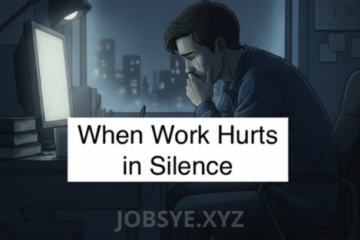
Normalizing Exhaustion, The Silent Psychological Damage of “Normal” Work. For decades, we were taught that having a “normal” job — fixed hours, a boss, a stable salary — was synonymous with security and well-being. However, more and more people experience chronic anxiety, apathy, irritability, and a persistent sense of emptiness even when “everything is fine.” Not to mention that working conditions are often so exhausting that there is no healthy time to eat, rest, or even take vacations.
This text explores the invisible psychological cost of workplace normality and why suffering is so often normalized.
What do we mean by “normal” work?
This is not about demonizing employment itself, but about examining a dominant model:
- Rigid and prolonged workdays
- Constant control over time and the body
- Little room for autonomy
- Continuous performance evaluation
- Identity tied to the productive role
This work format often ignores the diversity of human rhythms, talents, and needs.
The kind of exhaustion that sleep doesn’t fix
One of the most common signs is emotional exhaustion. It is not a lack of physical rest, but psychological wear and tear:
- The feeling of always being “in debt” to work
- Difficulty enjoying free time
- Ruminating thoughts even outside working hours
The body rests, but the mind does not shut off.

Microviolencias cotidianas
El daño no siempre proviene de grandes abusos, sino de pequeñas prácticas normalizadas:
- Emails and messages outside of working hours
- Ambiguous or unattainable goals
- Subtle humiliations disguised as feedback
- Constant competition among coworkers
- Workplace harassment
- Excessive work hours
These micro-violences, accumulated over time, erode self-esteem and one’s sense of personal worth.
Identity reduced to productivity
When a person’s value is measured almost exclusively by performance
- Mistakes are experienced as personal failure
- Rest generates guilt
- Creativity shuts down out of fear of making mistakes
Thus, work carries a high emotional cost.
Functional anxiety and silent depression
Many people continue to function “well” while internally feeling empty or distressed. This has been called:
- High-functioning anxiety
- Functional depression
The psychological damage of “normal” work is silent because it is socially accepted. Naming it is the first step toward reclaiming emotional dignity and making space for more humane, conscious ways of working that are aligned with life.
Do you listen to what your emotions are telling you?
0 comentarios